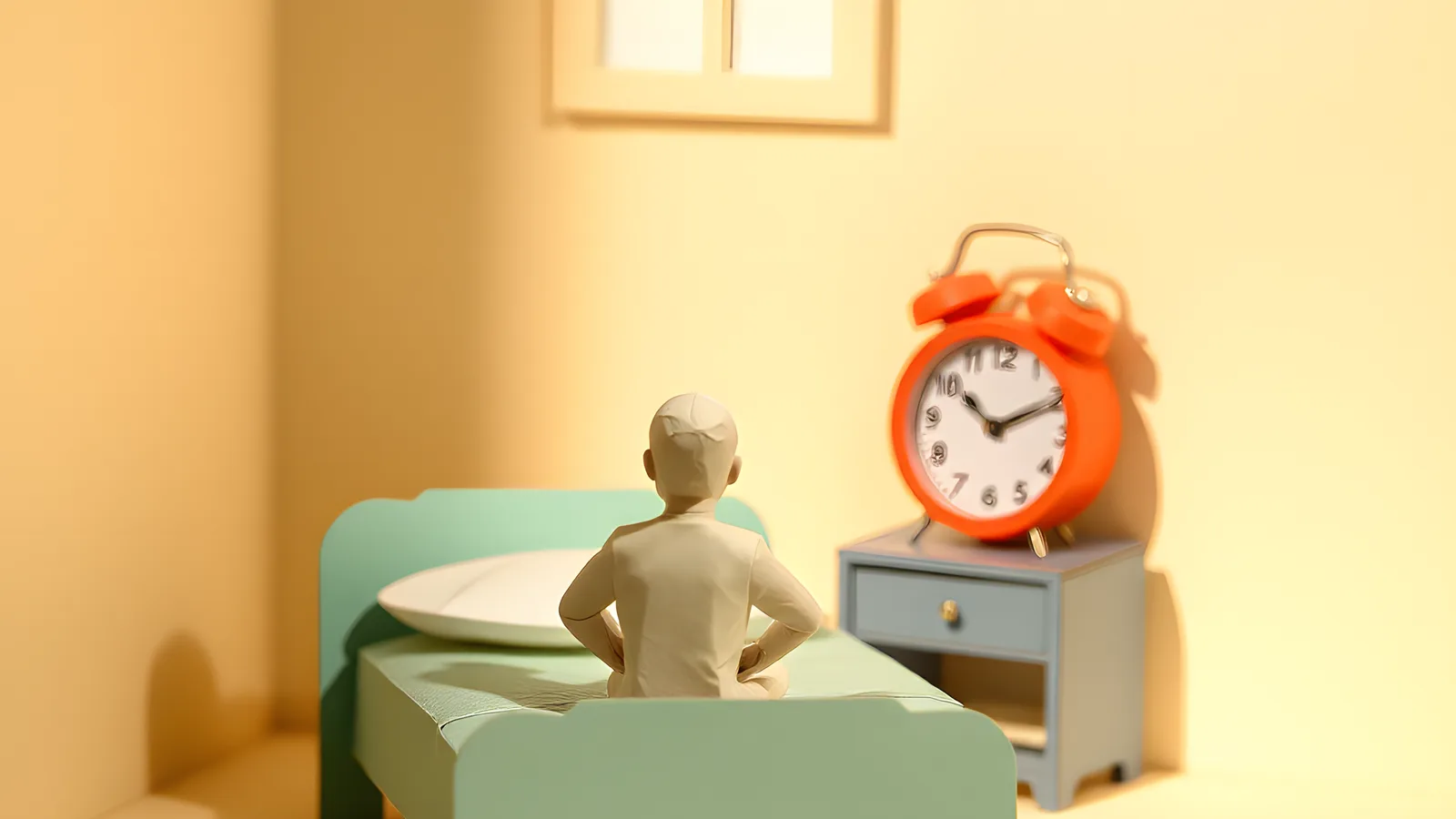
I blamed my ADHD for three years. It was my airway.
I stopped breathing seventeen times a night. Every night, for years. I had no idea. I just thought I was tired because of my ADHD.
It started with a new job, then COVID, then the flu, all inside three weeks. Annoying, but survivable. Except my energy never came back. I would sleep a full night and wake up with nothing in the tank. I was not tired like a person who needs an early night. I was tired like a phone that reads one percent no matter how long it sits on the charger.
For most of the three years it took to work out, I blamed my ADHD. That felt reasonable. ADHD fatigue is real, I coach people through it, and I had a diagnosis sitting right there, ready to explain everything. Then a stack of medical tests found the actual culprit, and it had nothing to do with my brain.
One thing before we go anywhere: I am an ADHD coach with ADHD and autism, not a doctor. This post is education, not medical advice, and none of the conditions below can be diagnosed off a blog. The point of this one is close to the opposite of self-diagnosis. It is knowing when to stop explaining your exhaustion with ADHD and hand the question to someone with a medical degree.

The hammer they hand you with the diagnosis
The day you get diagnosed with ADHD, it is like being handed a hammer. Suddenly every problem in your life looks like an ADHD-shaped nail. Can't start? ADHD. Tired all the time? ADHD. Forgot to eat again? ADHD. It explains everything, and that feels incredible for about a month.
Except ADHD is one of the most comorbid conditions we know of. It almost never travels alone. There is even a nickname for this, the neurodiversity salad bar, because you rarely get just the one thing on your plate. My own family is a decent sample. My mum is diagnosed but cannot take the standard stimulant medication. My uncle has ADHD, and bipolar, and autism. Same gene pool, completely different plates.
And fatigue is one of the regulars at that salad bar. A UK birth cohort that followed thousands of children found that the ones above the ADHD threshold at age nine were about twice as likely to have chronic disabling fatigue at eighteen, an association that held even after accounting for depression (Quadt, Loades et al., BMJ Open 2024). Honest caveats: it is one cohort, it used a screening measure rather than formal diagnoses, and an association is not a mechanism. But the signal is worth knowing, because it points at the thing this whole post is about. The exhaustion sitting next to your ADHD is sometimes its own condition, with its own name, quietly going untreated.
So your plate has probably got more than one thing on it too. And just because it looks like ADHD and smells like ADHD does not mean it is a duck.

The one question: does rest actually fix it?
Ordinary tired, and ordinary ADHD tired, obeys a rule. You spend, you rest, you come back. Maybe not to a hundred percent, but you come back, and a bit of movement usually helps rather than hurts. That everyday kind has its own mechanics and deserves its own post, so it gets one.
The other kind does not play by those rules. You wake up just as tired as when you went to bed. The fog will not lift. And here is the tell, the one that matters most: pushing yourself does not cost you that day. The bill arrives one or two days later.
Doctors call that post-exertional malaise, or PEM. It is the hallmark feature of myalgic encephalomyelitis / chronic fatigue syndrome (IOM/NAM 2015 criteria; CDC): a delayed worsening of symptoms, typically 12 to 48 hours after physical or mental exertion that would once have been trivial, and it can last days or weeks. Ordinary ADHD fatigue, the afternoon-crash kind, does not do this.
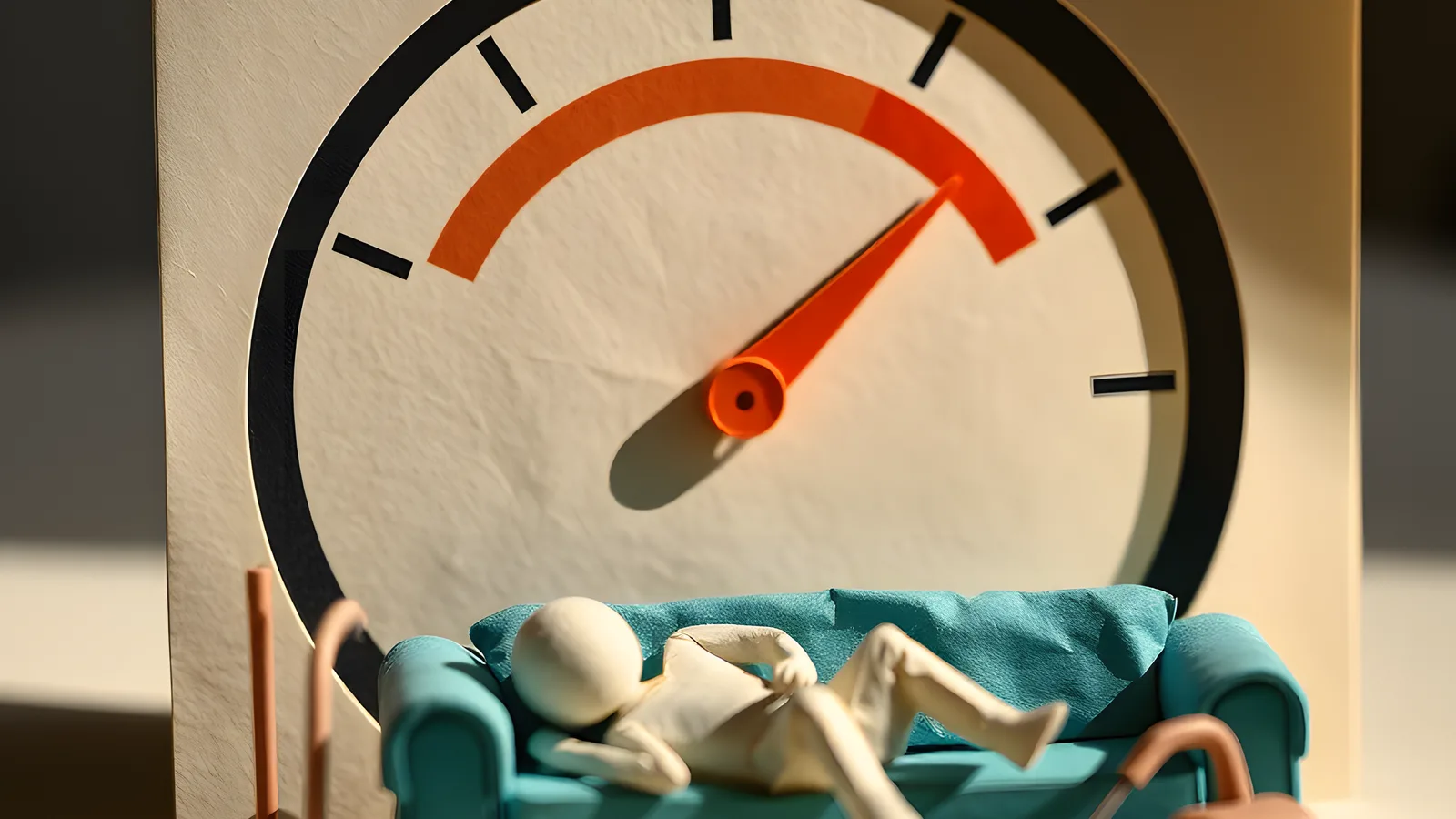
For me, PEM was the reason my whole day became a single chore. Tidy the floor, or mop the floor, or vacuum. Pick one. Because if I did two, I was flat on the couch for the next three days with a burning ache deep in the muscles. Not sore like after a workout. Sore like the meter had been read and I owed money.
That delayed crash is a fingerprint, and it can sit underneath a whole list of things. Long COVID. Post-viral fatigue. ME/CFS. POTS, a circulation condition that can genuinely masquerade as ADHD, because it produces adult-onset attention problems in people whose childhoods were fine (Raj et al., 2009). Or, in my case, sleep apnoea. None of which a colour-coded planner and a good attitude were ever going to fix.
Why the usual advice gets this wrong
"Just exercise more." For ordinary tiredness, and for ADHD fatigue, this is genuinely good advice. For the delayed-crash kind, it can be exactly the wrong move. The CDC states plainly that people with ME/CFS cannot tolerate standard exercise programmes and can be substantially harmed by them, and in 2021 the UK's guideline body formally reversed its position and withdrew graded exercise therapy for ME/CFS altogether (NICE NG206). In two-day exercise testing, ME/CFS patients measurably lose capacity on day two, which is the delayed crash showing up in lab numbers. If effort reliably makes you worse days later, the exercise ramp is not your ramp.
"Push through it." Pushing is the thing that triggers the crash. Powering through a condition defined by delayed payback is not resilience, it is taking out a loan at a rate you have already seen the statement for.
"Do a vagal reset, it fixes your nervous system." The internet loves this one, so here is the honest version. There is a real, well-replicated autonomic signature in ME/CFS and POTS: the calming, parasympathetic side of the nervous system runs low and the alarm side runs high (Nelson et al., 2019). But that story belongs to those conditions, and the popular claim that ADHD itself is a nervous-system dysregulation you can breathe your way out of is not supported by the evidence. And nothing, for any of these conditions, has earned the word "fix" yet.
"It's probably just your ADHD." This one can be wrong in both directions at once. Your fatigue might not be ADHD at all, and your attention problems might not be either, because conditions like POTS can produce them from scratch in adulthood. Assuming ADHD is doing all of it is how a treatable medical condition gets to sit undiagnosed for years. Ask me how long. Three years.
What actually helps
Notice what this list is not. It is not a productivity system, because you cannot organise your way out of a medical condition. Almost everything here is about getting the right people involved and then spending your energy like the scarce thing it currently is.
1. Ask the red-line question
Does rest actually fix it? And when you push, does the crash come that day, or a day or two later? If rest works and movement helps, you are most likely in ordinary ADHD-fatigue territory. If rest has stopped working, and effort produces a delayed crash, that is a go-and-get-checked flag, not a try-harder one. Naming the pattern is the entire win here, and it costs you nothing.
2. Track it for two weeks, then take it to a GP
"I'm always tired" is hard for a doctor to act on. "Here are fourteen days of what I did and when I crashed" is evidence. Note your activity, your sleep, and the days you fall over, and take the pattern in. Then get checked properly. I went through the lot: blood tests, ECGs, and finally a sleep study, which found I stop breathing about seventeen times a night. The thing that gave me the biggest chunk of my life back was not a mindset shift. It was a little mouthguard that holds my airway open while I sleep. Deeply unsexy. Absolutely life-changing.

3. Pace instead of push
For anyone whose crashes arrive late, pacing is the approach the guidelines actually endorse (CDC; NICE): stay inside the amount of activity that does not trigger a crash over the next day or two, and treat that ceiling as real. Being straight about the evidence, pacing is recommended more for its safety than for blockbuster trial results. It reduces crashes; it is not a cure. In practice it looks like doing the physical stuff early, before the tank is empty rather than after. One physical task a day, not three. And telling the people around you where your energy is at, so a "no" reads as a battery level instead of a personality flaw.
4. If you try nervous-system work, call it an experiment
Slow breathing and similar practices target a system that genuinely runs out of tune in ME/CFS and POTS, and they are low-risk. But the best current evidence is a single small feasibility trial that was not designed to prove the approach works. So by all means try it, under guidance, as an experiment. Just do not let anyone sell it to you as the fix, and do not let it delay the medical workup that actually answers questions.
5. Stop treating rest as something you have to earn
Three years in, I am better. Not fixed. Better. And I still get it wrong constantly. I will feel okay, do two things in a day, and pay for it for three days, genuinely shocked every time, like I have never met myself before. The hardest strategy on this list was never the tracking or the pacing. It was forgiving myself for having limits, and letting rest be load management instead of a reward for output I had not produced. If your battery is the problem, rest is not you slacking off. Rest is the work.

What this looks like in practice
The delayed crash. A good day arrives and you spend it like a lottery win: three chores, a walk, a social thing. Two days later you cannot get off the couch and you are baffled, again. The shift is planning for the version of you who pays the bill, not the version holding the wallet. Good days get a ceiling too. That is what makes more of them.
The one-chore day. Tidy, mop, or vacuum. Pick one. It sounds absurd until you have paid the three-day price for picking two. A single finished chore inside your envelope beats three finished chores followed by three lost days, and the maths is not close.
The "no" that is just a number. Instead of performing wellness for your family and crashing in private, you tell them where the battery is at. "I'm at 20% today" is not a confession or a character flaw. It is a reading. People can work with a reading.

Key takeaways
- ADHD rarely travels alone. It is one of the most comorbid conditions going, and long-term fatigue is a regular companion, so "it's just my ADHD" deserves an occasional audit.
- The red-line question: does rest actually fix it? Recoverable fatigue responds to rest and movement. If it stopped responding, treat that as information.
- A crash that arrives one or two days after effort is called post-exertional malaise. It is the hallmark of ME/CFS territory, and it can also point to long COVID, POTS, or something else medical, including plain unglamorous sleep apnoea.
- "Just exercise more" is the wrong advice for this kind of fatigue. The UK guideline body withdrew graded exercise for ME/CFS in 2021. Get the tests before you get the training plan.
- Pacing, tracking, and rest-as-load-management are the honest tools. None of them is a cure. All of them beat pushing.
- New, lasting exhaustion that sleep will not touch, especially after a virus, is a "see your GP" sign. Getting checked is not weakness. It is about the most self-respecting thing you can do.
Related reading
- ADHD Sleep Problems and Solutions - The sleep side of the energy equation, covered properly.
- Exercise and Dopamine: Moving Your ADHD Brain - Why movement is brilliant advice for ADHD fatigue, which is exactly why the exception in this post matters.
- ADHD Masking at Work: The Hidden Tax - The chronic, cumulative load that drains the same battery.
- ADHD Parent Burnout - When the demands never stop and the tank runs dry.
- ADHD Overwhelm Spiral: How to Pause and Reset - The crash-and-freeze cousin of fatigue, and how to climb out.