To everyone else, you're "so together." And it's costing you everything.
You're in a meeting, performing brilliantly. Organised, articulate, engaged. Inside, you're running a dozen background processes: monitoring your facial expressions, suppressing the urge to fidget, tracking who said what, managing your emotional reactions, trying to look like you're taking notes when you lost the thread 5 minutes ago.
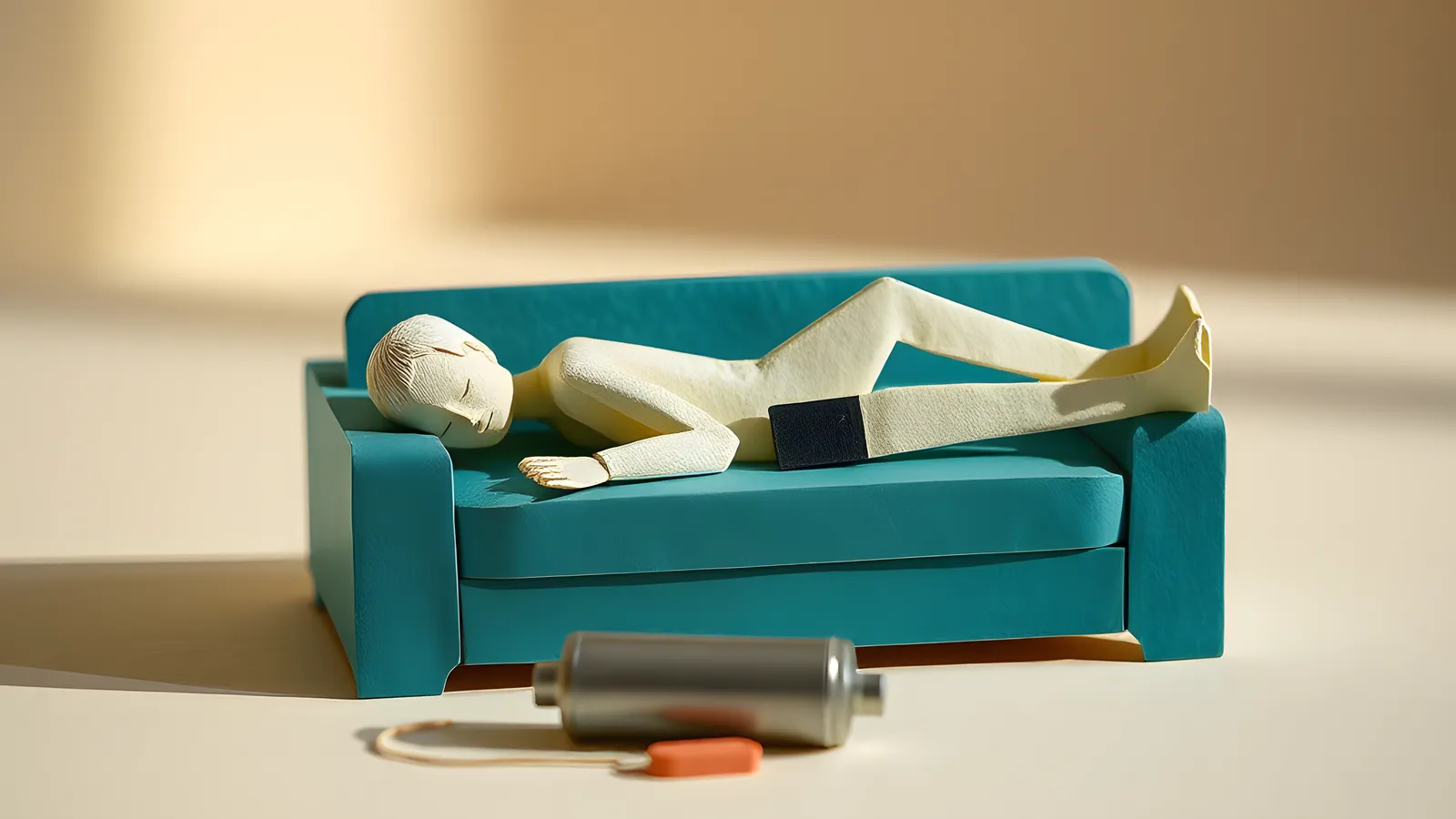
The meeting ends. Someone pulls the plug. You sit in your car or at your desk, completely blank. Not just tired. Emptied. You couldn't form a coherent sentence if someone paid you.
The hardest part? Nobody sees it. To everyone else, you're "so high-functioning," "so capable." And you can't explain that the version of you they see costs everything you have.
That cost is ADHD masking, and it has a measurable neurological price. In this guide, you'll learn why masking drains you faster than anything else, why "just be yourself" is terrible advice, and six strategies to reduce the energy tax without putting your career at risk.
If masking is also driving you to stay up too late recovering, ADHD Evening Wind-Down covers the evening dopamine-seeking pattern that heavy masking days create.
What Masking Actually Is (And What It Costs)
Masking (also called camouflaging) is the conscious or unconscious process of suppressing ADHD traits to appear more neurotypical. It's a survival strategy developed in response to a world designed for neurotypical brains, and the cognitive cost is enormous.
The cognitive load
The ADHD brain must manually operate executive functions that neurotypical brains automate. In professional settings, you're actively managing: attention (look engaged), impulse control (don't interrupt), emotional expression (appear calm), working memory (remember what was said), organisation (seem prepared), and time awareness (be on time). Each of these is effortful and conscious, not automatic.
Research confirms that increasing cognitive load produces reduced performance, greater reaction time variability, and reduced brain network efficiency in ADHD (Le Cunff, 2024). For someone with impaired executive function, one unit of effort produces only half a unit of output, meaning twice the effort is required to achieve the same observable result as peers.

Why it depletes faster than anything else
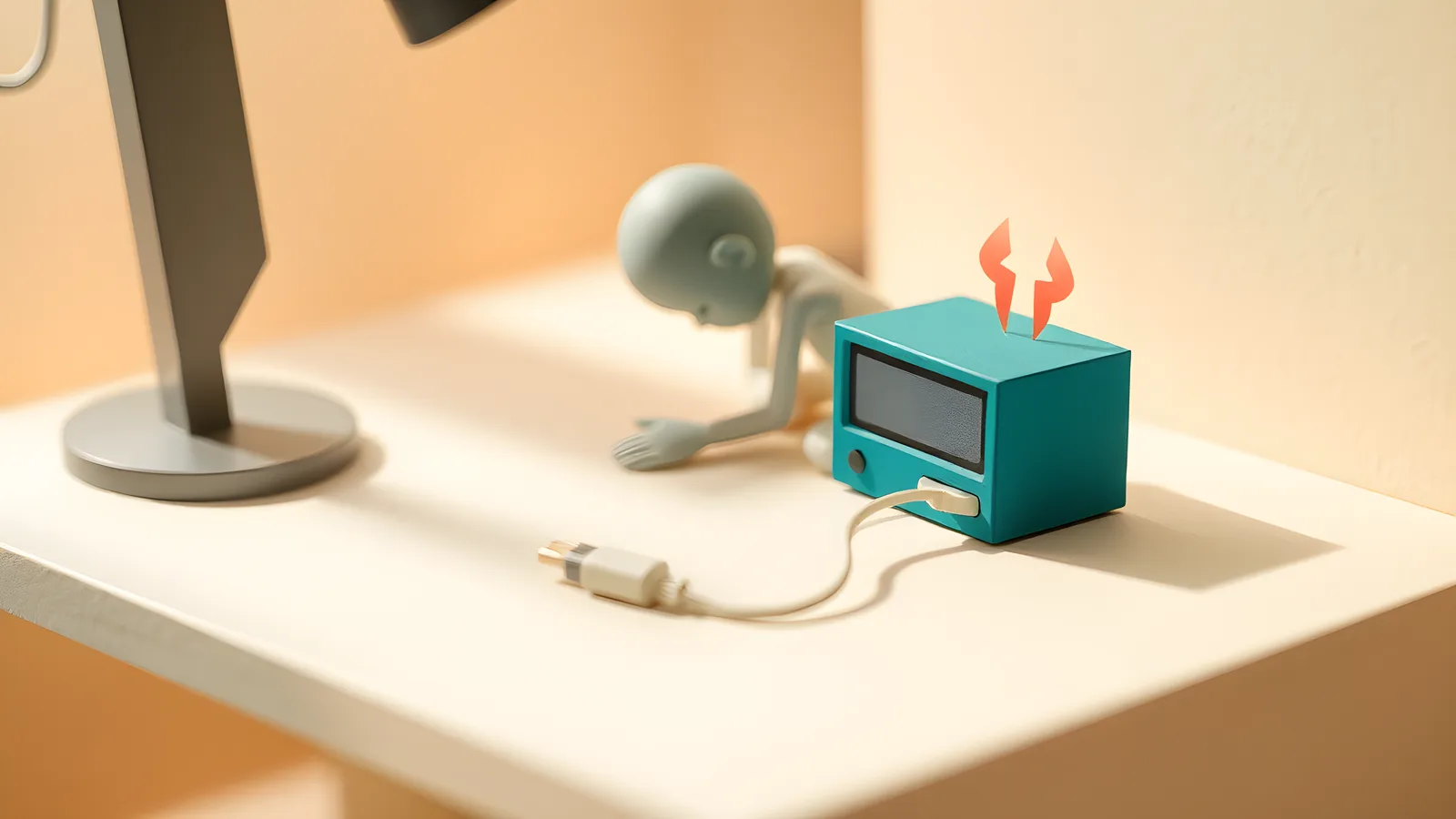
Masking involves sustaining multiple executive function demands simultaneously over an extended period, with no breaks and high social stakes. It's the cognitive equivalent of running multiple demanding programs on a computer with limited RAM. The system eventually overheats and crashes.
Recovery time is consistently underestimated. People predict 30 minutes. The data shows 2 to 4 hours. After a full day of heavy masking, some people need an entire evening of sensory decompression before they can function socially again.
The gender gap
Women are diagnosed with ADHD approximately 5 years later than men. In childhood, the ratio is 3:1 boys to girls; in adulthood it approaches 1:1, indicating massive under-diagnosis in girls. Why? Girls are socialised to display traits (empathy, organisation, obedience) that directly conflict with visible ADHD symptoms. Many develop sophisticated masking early, hiding symptoms so effectively that clinicians miss the diagnosis entirely.
Why "Just Be Yourself" Doesn't Work
"High-functioning means it's not that bad." "High-functioning" ADHD often means "high-masking." The apparent competence IS the mask, not the reality underneath it.
"Everyone puts on a professional face at work." Yes, but neurotypical professional behaviour is largely automatic. ADHD professional behaviour is effortful and resource-intensive. The difference is like walking versus running. Same destination, dramatically different energy cost.
"Just be yourself!" After years or decades of masking, many ADHD adults genuinely don't know what "themselves" looks like without the mask. Unmasking is a process, not a switch.
"Stop caring what people think." Social consequences are real. In many professional contexts, visible ADHD symptoms do result in negative judgement. Dismissing this ignores the real reasons masking developed in the first place.
Six Strategies to Reduce the Energy Tax
1. Energy budgeting with masking load
Track masking intensity as a separate energy expense, just as you'd track exercise or work demands. This makes the invisible cost visible and enables better planning.
How to do it: After each significant social or professional interaction, rate the masking intensity on a 1 to 5 scale (1 equals fully authentic, 5 equals full performance mode). Log this alongside your energy ratings. Over two weeks, patterns will emerge: which situations cost the most, which are sustainable, and how much recovery time each level requires. If Tuesday has a level-5 client presentation, don't schedule anything demanding for Tuesday evening or Wednesday morning.

2. Sensory decompression protocol
After high-masking periods, use sensory-based strategies to shift your nervous system from performance mode back to rest. This is active recovery, not just "resting."
How to do it: Build a personal decompression menu: dim lights and reduce visual stimulation, change into comfort clothes, use a weighted blanket, have a warm drink, listen to calming audio or enjoy silence, use cold water on your face or wrists for a parasympathetic reset. Don't try to be productive during decompression. This IS the productive activity. If your emotional regulation is also struggling, the temperature reset from that guide works brilliantly here.

3. Strategic disclosure (selective unmasking)
Gradually reduce masking load by selectively sharing your ADHD with trusted people in safe contexts. You don't need to unmask everywhere. Strategic disclosure in key relationships reduces the overall energy burden significantly.
How to do it: Start with the safest person: therapist, coach, trusted friend, or ADHD support group. Practise language: "I have ADHD, and [specific thing] is harder for me than it looks. What helps me is [specific accommodation]." If the response is positive, gradually expand to other safe people. In workplace contexts, focus on needs and accommodations rather than detailed symptom descriptions.
4. "Necessary versus habitual" masking audit
Not all masking is required. Some is genuinely necessary for safety or professional survival. Some is habitual, leftover patterns from environments where it was once needed but no longer is.
How to do it: List your regular social and professional contexts. For each, ask: "What would happen if I stopped masking here? Is the risk real or imagined?" You might find you mask heavily with your partner (habitual, they already know and love you) or with close colleagues (habitual, they'd probably be fine with you fidgeting). Focus unmasking energy on habitual contexts first. Reserve masking energy for contexts where it's genuinely necessary.
5. Accommodation requests as masking reduction
Formal or informal accommodations directly reduce the need to mask. Each accommodation is an area where you no longer need to spend energy pretending.
How to do it: Identify your highest-cost masking behaviours at work. For each, consider what accommodation would reduce it. "I mask attention difficulties in meetings" leads to requesting meeting agendas in advance and permission to take notes. "I mask disorganisation" leads to using shared task management tools that externalise organisation. "I mask fidgeting" leads to requesting camera-optional meetings or bringing fidget tools. Many accommodations benefit everyone and don't require formal disclosure.
6. The masking recovery day
After sustained high-masking periods (conferences, intensive social weeks, performance reviews), schedule genuine recovery time. Not "lighter work." Actual reduced-demand time.
How to do it: After a heavy masking period, block one to two days with minimal social and professional demands. Cancel or reschedule non-essential meetings. Work from home if possible. Reduce sensory input. Prioritise sleep, gentle movement, and low-stimulation activities. This is not indulgence. It's necessary maintenance. Communicate this proactively: "I'm blocking Friday as a focus/recovery day" is a perfectly professional boundary.
What This Looks Like in Practice
If you're a professional: Your best tool is the masking audit. Spend a week tracking where you mask and how much it costs. You'll likely discover you're masking at full intensity in contexts where it's not needed: with colleagues who already like you, in meetings where nobody is evaluating you, in conversations where fidgeting or directness would be perfectly fine. Redirecting that energy to the contexts where masking actually matters (client pitches, performance reviews) gives you more capacity where you need it.
If you're a parent with ADHD: By the time you get home from work, your masking reserves are spent. Your kids get the version of you with nothing left, and then you feel guilty about it. The sensory decompression protocol is for you. Give yourself 15 to 20 minutes of genuine recovery when you walk in the door. Change clothes, dim lights, sit quietly. Tell your family: "I need 15 minutes before I'm ready." That buffer makes the rest of the evening better for everyone. If you're heading toward burnout, ADHD Parent Burnout Recovery goes deeper.
If you're supporting someone who masks: The version of your colleague, partner, or friend that you see may be the performance, not the person. If they seem "fine" at work but crash at home, that's masking, not inconsistency. The most helpful thing you can do: don't require the performance. Let them fidget, be direct, lose their train of thought. Every context where they can be authentic is one less place draining their reserves.

Key Takeaways
- ADHD masking is the effortful, conscious suppression of ADHD traits to appear neurotypical. It costs dramatically more cognitive energy than neurotypical "professional behaviour."
- "High-functioning" often means "high-masking." The competence is the mask, not the reality underneath.
- Track masking intensity as a separate energy expense. Make the invisible cost visible so you can plan around it.
- Audit your masking: some is necessary, much is habitual. Focus unmasking on safe contexts where the risk is imagined, not real.
- Recovery time after masking is consistently underestimated. Schedule genuine decompression and defend it.
Related Reading
- ADHD Meeting Fatigue: Energy Management at Work - Meetings are the highest-masking professional context. This guide covers the specific energy management strategies.
- Emotional Regulation for ADHD: 5 Neuroscience-Based Tools - Emotional masking is one of the most draining forms. These tools help you manage emotional intensity without suppressing it.
- ADHD Parent Burnout Recovery: Self-Care Strategies - When masking exhaustion meets parenting demands, burnout follows.
- Deep Work for ADHD: Focus Strategies That Stick - Protecting focus windows after high-masking days helps you recover productive capacity.