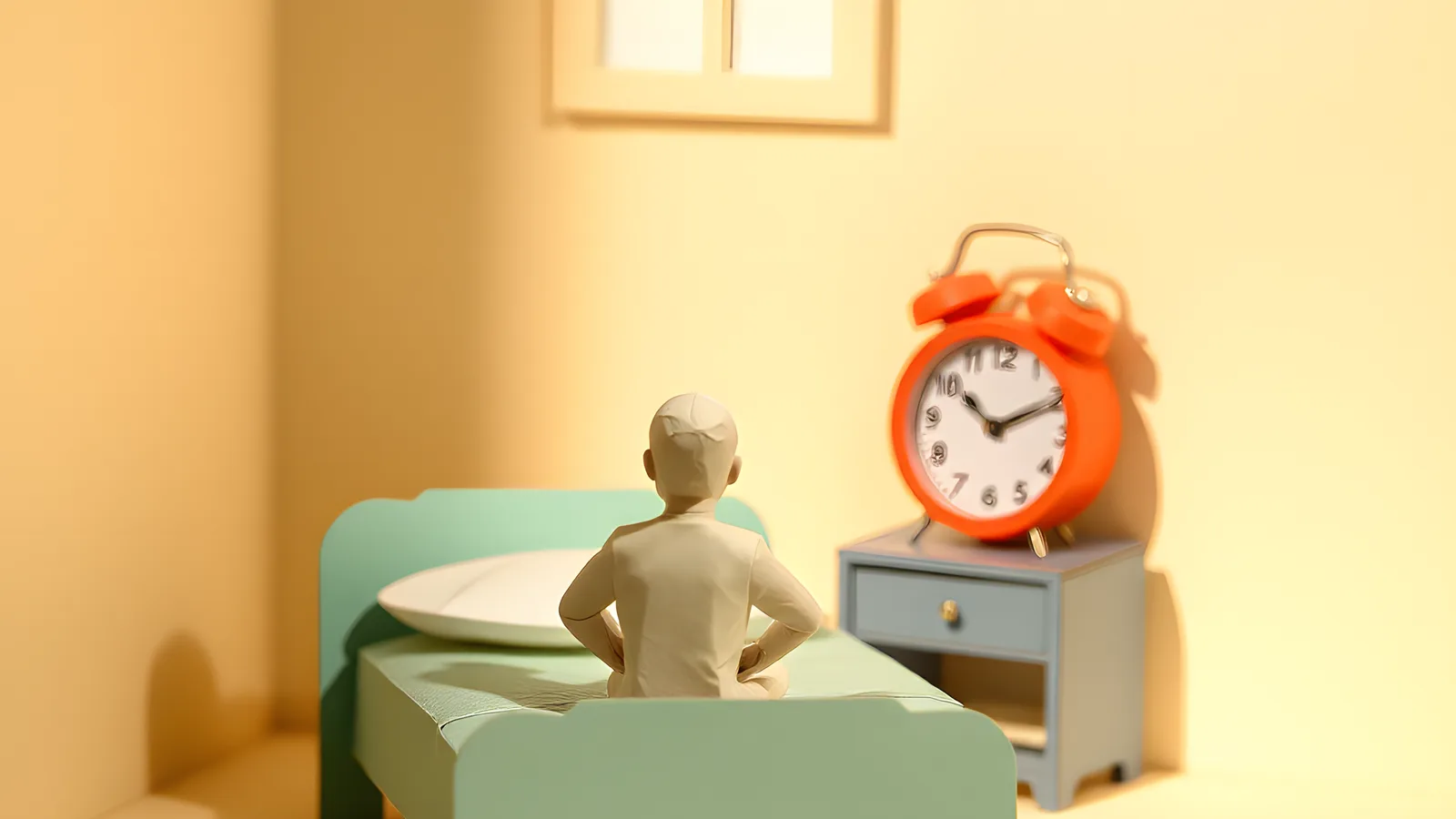
You're too exhausted to do the things that would make you less exhausted.
You know, intellectually, that you need to rest. You've read the articles. You've felt the crash coming. But the moment you sit down to actually do something restorative, a voice pipes up: "But you haven't finished X yet. You're being lazy. Other people don't need this much time to recover."
So you don't rest. You push through. And then you hit a wall so hard that even basic tasks feel impossible.
Self-care starts feeling like yet another thing you're failing at. There's the list of what you should be doing (sleep well, move your body, eat properly, see friends, do hobbies) and then there's the unbridgeable gap between that list and what you actually manage.
The paradox isn't lost on you. You need energy to set up a bath, decide what to eat, book an appointment, or get yourself out for a walk. When you're already depleted, these barriers feel insurmountable.
This guide is for ADHD parents (and honestly, anyone with ADHD running on empty). You'll learn why burnout hits harder and faster, why standard self-care advice doesn't work, and seven strategies that fit the reality of a depleted brain.
Why ADHD Parents Burn Out Faster
ADHD burnout isn't the same as regular tiredness, and it's not just "being stressed." It's the result of chronic allostatic overload, the cumulative wear and tear on your body when sustained demands exceed your coping capacity.
The baseline is already higher
For people with ADHD, the baseline stressors are constant: difficulty with time management, task initiation, emotional regulation, and social navigation means the nervous system is working overtime just to meet neurotypical expectations. Layer parenting on top of that, and you're running a marathon before the day even starts.
Research published in 2024 found that executive function deficits mediate the relationship between ADHD and job burnout. Difficulties with time management and self-organisation contribute to physical fatigue, while problems with planning and problem-solving drive emotional exhaustion. The same mechanism applies to the "job" of parenting.
You can't feel the warning signs
Interoceptive awareness, the perception of internal body signals like hunger, thirst, stress, and fatigue, is impaired in ADHD. You might feel thirsty but can't decide what to drink. You might notice you're stressed only after you've already crashed. By the time you recognise burnout, you've been running on fumes for weeks.
Self-care requires the thing that's broken
Self-care demands planning, initiation, and follow-through. The exact functions ADHD impairs. When you're depleted, these barriers become insurmountable. The irony is brutal: the thing you need most is the thing your brain struggles hardest to prioritise.
The masking tax compounds it
If you're masking at work all day and then coming home to manage children, meals, homework, and bedtime, you're running two simultaneous cognitive loads with no recovery time between them. By evening, there's nothing left. The guilt about having nothing left for your kids makes it even worse.

Why Standard Self-Care Advice Fails
"Just make time for yourself." Making time requires planning and boundary-setting, which require executive function, which is what's depleted. The advice assumes the very capacity that burnout has destroyed.
"Self-care is bubble baths and candles." Self-care in ADHD context means strategic management of cognitive, emotional, and sensory load. It includes unsexy things like meal planning, delegating tasks, saying no, and adjusting sensory environments. It's infrastructure, not indulgence.
"If you have energy for fun things, you have energy for responsibilities." ADHD brains are dopamine-driven. Novelty, interest, and urgency unlock energy that simply isn't available for boring or non-urgent tasks. The energy for hyperfocus on something fun and the energy for admin tasks draw from different neural pathways. This isn't dishonesty. It's neurobiology.
"You should be able to notice when you're burning out." Without good interoceptive awareness, burnout is invisible until catastrophic. Waiting for internal signals to tell you to rest is like waiting for a check engine light that doesn't work.

Seven Strategies That Fit a Depleted Brain
1. Minimum viable self-care
The stripped-down version you can do even on your worst day. Not the ideal routine. The essential one.
How to do it: Identify your three non-negotiable self-care items: medication, hydration, sleep, movement, food. Pick yours. Make them automatic: alarms on your phone, water bottle on your desk, medication by your keys. When executive function is low, you're not making decisions. You're just following the path of least resistance.

2. Energy accounting
Track what depletes you and what restores you over a week. This makes the invisible visible.
How to do it: At the end of each day, note three things that depleted you and three that restored you. Rate each on a scale of minus 5 (deeply draining) to plus 5 (highly restorative). After a week, look for patterns. Maybe social time drains you on Mondays but restores you on Thursdays. Maybe admin tasks are worse when you're hungry. Schedule more restoration on high-depletion days. Protect your restorative activities like you'd protect an important meeting.
3. Scheduled recovery blocks
Rather than waiting until you've crashed to rest, block recovery time into your calendar. This removes the decision-making burden.
How to do it: Identify a realistic rhythm: maybe 90 minutes of recovery every three days, or a full recovery day weekly. Schedule it. Communicate this boundary to people in your life. During recovery blocks, engage in genuinely restorative activities, not scrolling, not guilt-ridden rest, but chosen restoration. A nap, time alone, nature, creative play, or time with people who don't require masking.

4. Micro-recovery practices
Small, dopamine-engaging recovery activities scattered through your day. The goal is preventing depletion from becoming catastrophic.
How to do it: Build a menu of practices that take 2 to 5 minutes and genuinely restore you. Fidget toys, stepping outside, a song you love, a particular snack, a specific scent, gentle movement, or a few minutes of a hobby. When you notice depleting activities, insert a micro-recovery after. The rhythm becomes: depleting task, micro-recovery, next task. Over time, this prevents the accumulation that leads to crash.
5. Sensory self-care
Proactively managing sensory input as a foundation for all other recovery. Nearly 60 per cent of people with ADHD experience concurrent sensory processing differences.
How to do it: Identify your sensory sensitivities (sound, light, texture, smell, movement, pressure). Build a sensory toolkit: noise-cancelling headphones, weighted blanket, fidget tools, sunglasses, comfortable textures. Modify your environment where possible: dim lights, soft surfaces, a quiet space. When sensory overload is high, prioritise sensory regulation before trying to engage with responsibilities. Managing sensory load directly restores cognitive clarity and emotional regulation.
6. The early warning checklist
Burnout doesn't arrive without warning. The warning is just invisible due to poor interoception. Make it visible.
How to do it: Create a list of your early burnout signs. Not generic ones, yours. Maybe it's that you stop reading for pleasure, or you become irritable with loved ones, or you can't make simple decisions, or you feel physical tightness, or you stop showering, or you hyperfocus intensely on one thing to the exclusion of everything else. When you notice three or more signs, burnout is approaching. This is the time to increase recovery, not push harder.
7. Ask for the specific thing
Naming what you actually need removes the shame and makes help possible.
How to do it: Tell one person in your life what you actually need to recover. Not what you think you should need. "I need to be left alone for an hour." "I need you to handle dinner because I can't make one more decision today." "I need someone to sit with me while I do this." Specificity bypasses the executive function barrier of figuring out what help to accept.
What This Looks Like in Practice
If you're a parent with ADHD: Your self-care probably looks nothing like the Instagram version. It might be eating protein before 10 AM, wearing noise-cancelling headphones during homework time, or booking one hour per week where someone else handles the kids and you do absolutely nothing productive. That counts. It all counts.
If you're parenting solo: The energy accounting is especially important for you because there's no backup. Knowing which activities drain you fastest lets you plan your week with some intelligence. If Tuesday is the heavy day, Wednesday needs a lighter load. Build micro-recoveries into the gaps (the school pickup queue is 5 minutes of silence with your headphones, not 5 minutes of checking emails).
If you're supporting an ADHD parent: Don't say "let me know how I can help." That requires them to assess their needs, identify a task, and delegate it, all executive function demands they're already maxed on. Instead, pick one specific thing and do it: "I'm making dinner tonight." "I'm taking the kids Saturday morning." Specificity is the gift.

Key Takeaways
- ADHD burnout is neurological, not motivational. Chronic allostatic overload from masking, executive function demands, and poor interoception makes ADHD parents especially vulnerable.
- Self-care requires executive function, creating a catch-22. The thing you need most is the thing your brain struggles hardest to prioritise when depleted.
- Start with minimum viable self-care: three non-negotiables automated with alarms and pre-staging. On bad days, this is enough.
- Track your energy with a simple depleting/restorative log. After a week, the patterns will tell you what to protect and what to reduce.
- Build an early warning checklist of your personal burnout signs. Prevention is dramatically easier than recovery.
Related Reading
- ADHD Masking at Work: When Exhaustion Catches Up - The masking tax is one of the biggest drivers of parent burnout. Understanding the cost helps you manage it.
- Emotional Regulation for ADHD: 5 Neuroscience-Based Tools - Emotional depletion and burnout are deeply connected. These tools help prevent the spiral.
- ADHD Sleep: Why Your Brain Needs Better Rest - Sleep is the foundation of recovery. If your sleep is broken, everything else falls apart faster.
- Building ADHD Routines That Last: The Science + Practice - How to make your self-care practices survive the inevitable disruption.