
Your brakes work. They just arrive late.
You hit send. You click buy. You walk out of the meeting. You blurt the comment, switch the tab, finish the snack. And only after the action does your brain catch up and ask, "wait, did I actually want to do that?"
The decision didn't feel like a choice. It felt like a reflex. Now you're in the post-impulse crash, where relief gives way to regret in roughly the time it takes to refresh the page.
If this is a familiar loop, the temptation is to file it under "I have no self-control." That label feels true because the evidence keeps stacking up. But the label is wrong, and worse, it's the reason most strategies you've tried haven't stuck. ADHD impulsivity isn't a moral failure. It isn't even one thing. It's at least four distinct processes, each running on different brain circuits, each responding to different tools.
In this guide, you'll learn the four flavours of ADHD impulsivity, why "just count to ten" tends to fail, and five strategies that actually map to what's happening in your brain. If most of your impulses fire when emotions spike, ADHD Emotional Regulation might be the better starting point.
Why ADHD Impulsivity Hits Different
The four flavours of impulsivity
Neuroscience research over the past two decades has been quietly dismantling the idea that "impulsivity" is one thing. There are at least four:
Response inhibition. The brain's ability to stop an action that's already in motion. The classic test is the stop-signal task: respond to a "go" signal, then occasionally cancel mid-motion when a "stop" signal appears. A 2024 systematic review of 27 studies, covering 883 adults with ADHD and 916 controls, found a moderate, reliable deficit (g = 0.51) (Senkowski et al., 2024). Your brakes work, they just engage slower and softer.
Choice impulsivity, or now-bias. A preference for smaller-sooner rewards over larger-later ones. Take $20 today or $100 in three months? Adults with ADHD systematically pick the immediate option, even when the delayed one is objectively better. A meta-analysis of 25 case-control studies (combined N = 3,913) confirmed this is a robust pattern (Jackson & MacKillop, 2016; Marx et al., 2021). The future $100 simply doesn't light up the ADHD reward system the way the present $20 does. You aren't choosing between a small reward and a large one. You're choosing between something real and something theoretical.
Delay aversion. Sonuga-Barke's dual pathway model proposes that for many ADHD brains, waiting itself is experienced as actively unpleasant. Impulsive action isn't just a failure to wait, it's an escape from the discomfort of waiting (Sonuga-Barke, 2002). This sounds subtle, but it changes everything about which strategy will work. If your impulsivity is delay aversion, willpower won't help. Making the wait less awful will.
Urgency. From the UPPS-P framework: acting rashly under the pressure of strong emotion, either negative (negative urgency) or positive (positive urgency). Adult ADHD shows elevations in both forms, with negative urgency the bigger driver (Miller et al., 2010). When emotion intensity climbs, the prefrontal cortex's regulatory capacity drops sharply. The angry text, the dramatic decision, the walking out, these tend to land at peak emotion, when your brakes are least available.
The reason this matters: each flavour responds to a different intervention. If your impulsivity is response inhibition failure, friction helps. If it's urgency, emotion regulation helps. If it's delay aversion, you need to reduce the awfulness of waiting. Treating all four with the same tool is why generic impulse-control advice tends to miss.

What this means in practice
Time blindness amplifies choice impulsivity. Many ADHD brains experience reduced subjective awareness of time passing. The bill due in three weeks doesn't feel meaningfully different from the bill due in three months (Barkley et al., 2001). Future consequences feel abstract because future time itself feels abstract. Strategies that ask you to imagine the future to motivate present restraint tend to fail, because the imagining isn't producing the felt urgency it's supposed to produce.
Dopamine seeking masks impulsivity as motivation. The ADHD brain runs on lower baseline dopamine, so it's constantly hunting for stimulation that feels rewarding. Online shopping, conflict, switching tasks, scrolling, these deliver exactly what the brain is hunting for. From the inside, this can feel like curiosity, drive, or motivation. From the outside, or in retrospect, it looks like impulsivity. The same drive that helps you start ten projects with genuine enthusiasm is the drive that abandons them when something newer appears.

Why "Just Count to Ten" Doesn't Work
"You just need more self-discipline." Self-discipline is a label applied retrospectively to people whose neural inhibition systems happen to work efficiently. It isn't a virtue you can summon by trying harder. The 2024 Senkowski meta-analysis confirmed the inhibition deficit in ADHD is structural and stable, not motivational. Telling someone with ADHD to be more disciplined is like telling someone with myopia to focus harder.
Pure willpower-based restraint. Trying to white-knuckle through urges burns through finite cognitive resources and tends to produce rebound (the dieter's binge, the abstinence relapse, the "screw it" moment after three days of restraint). For ADHD specifically, willpower failures also generate intense shame, which becomes the next impulse trigger. Strategies that work with the pattern (friction, alternatives, environmental design) outlast strategies that fight it.
Shame-based motivation. "I should know better by now." "I'll just have to be more responsible." Shame activates the threat system, which further reduces prefrontal function. Counter-intuitively, the more shame you direct at yourself for impulsive behaviour, the more impulsive you're likely to be. Self-compassion isn't a soft alternative, it's the option with better evidence.
Generic mindfulness without ADHD adaptation. Standard MBSR programmes ask for 30 to 45 minutes of daily formal practice. ADHD brains often can't sustain this, and the dropout rates show it. A 2025 meta-analysis (Liu et al.) found small-to-moderate effects on overall ADHD symptoms but only a small effect on hyperactivity/impulsivity specifically. If you're trying mindfulness, find an ADHD-adapted programme (Zylowska's MAP is the best-known) rather than a generic one.
Match the Strategy to the Flavour
The five strategies below each target a specific flavour. Before applying any of them, the foundational move is to identify which flavour you're actually dealing with.
1. Identify the flavour first
Targets: all flavours.
Before reaching for a tool, ask which kind of impulse this was. If it was emotion-driven (urgency), use emotion regulation upstream rather than impulse control downstream. If it was "didn't think it through" (lack of premeditation), use implementation intentions. If it was "couldn't stand the wait" (delay aversion), insert stimulation into the waiting period instead of trying harder to wait. If it was "acted before the brakes engaged" (response inhibition), add friction.
How to do it: Keep a one-line impulse log for two weeks. Each time you act impulsively, write what happened, which flavour it was, and what would have helped. The logging itself builds metacognitive awareness, and the patterns guide which strategies are worth investing in. Two weeks is enough to see your dominant flavour. Most people run on one or two, not all four.
2. Implementation intentions (if-then plans)
Targets: lack of premeditation.
Implementation intentions are if-then plans linking a specific situational cue to a specific response. Gawrilow and Gollwitzer (2008) found that children with ADHD who formed if-then plans performed at neurotypical levels on a go/no-go task. The mechanism: the plan automates action control by building a cue-response link, which fires faster and more reliably than top-down deliberation. For ADHD brains, this offloads inhibition from the impaired top-down system to the faster bottom-up associative system.
How to do it: Pick three of your most predictable impulse traps (specific app, specific time of day, specific emotional state). For each, write one if-then plan. The format matters: vague plans don't work, specific plans do. Not "I'll be more disciplined with shopping," but "If I open the Amazon app after 9pm, then I close it and put the phone in the kitchen." Rehearse the plan when you're calm, not when triggered. The rehearsal builds the automatic link that fires when the trigger appears.
3. Friction architecture
Targets: response inhibition.
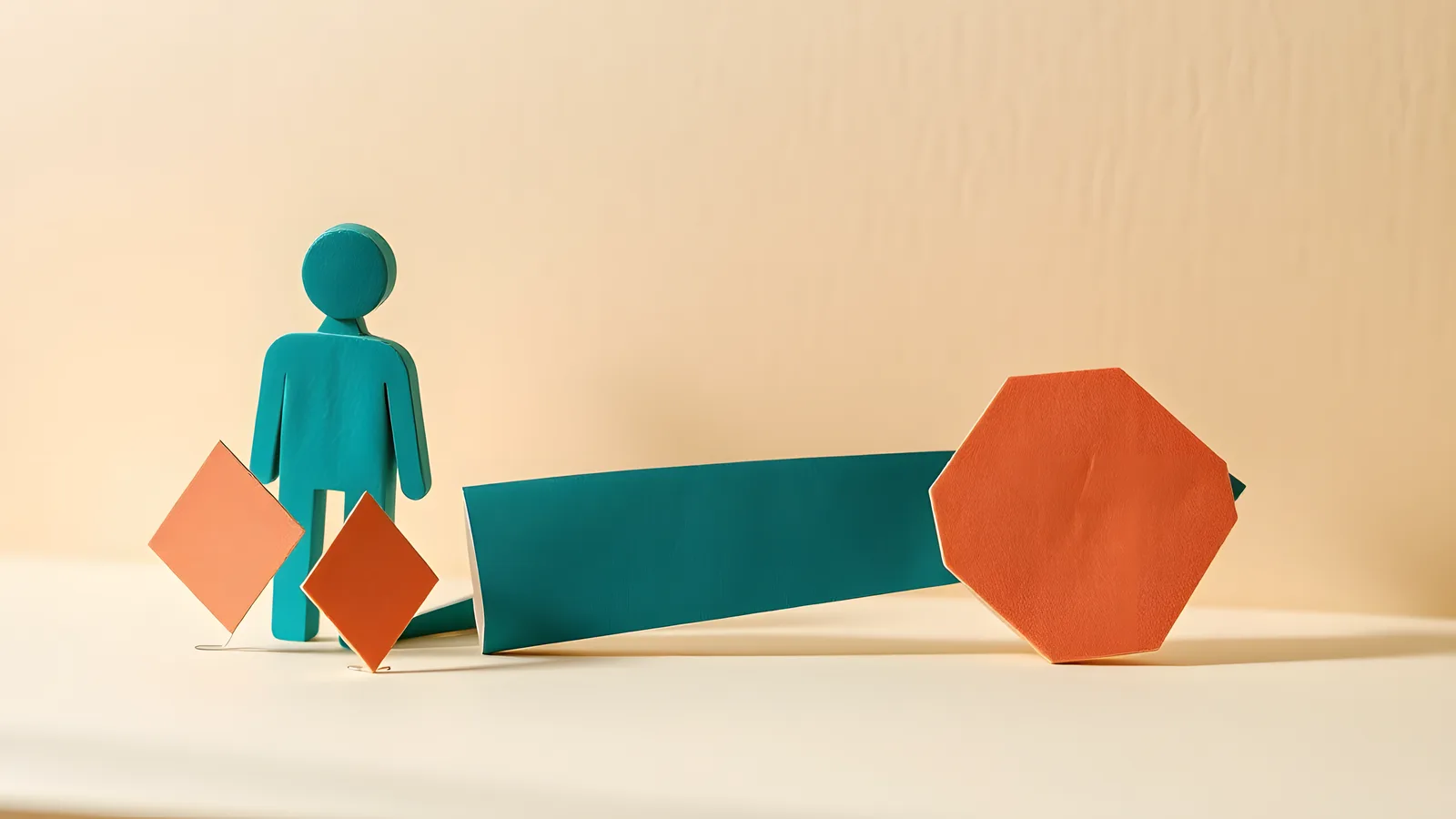
Add deliberate steps between impulse and action without removing the action entirely. Friction works because the ADHD brain often lacks the inhibition to stop, but it does have the inhibition to pause once an obstacle appears. The pause is enough to let the slower brake signal arrive.
How to do it: Audit your top three impulse domains. For each, add one piece of friction. Phone in another room overnight. Saved card removed from one shopping app. Social media apps deleted from phone, accessible only via browser. A 48-hour rule on anything over a price threshold you set when calm. The friction should be enough to interrupt the automatic loop but not so onerous you bypass it on day three. If you find yourself routing around it, the friction is too high or the impulse is too strong, and you need a different layer (an accountability partner, a different environment, or both).

4. Urge surfing
Targets: urgency, delay aversion.
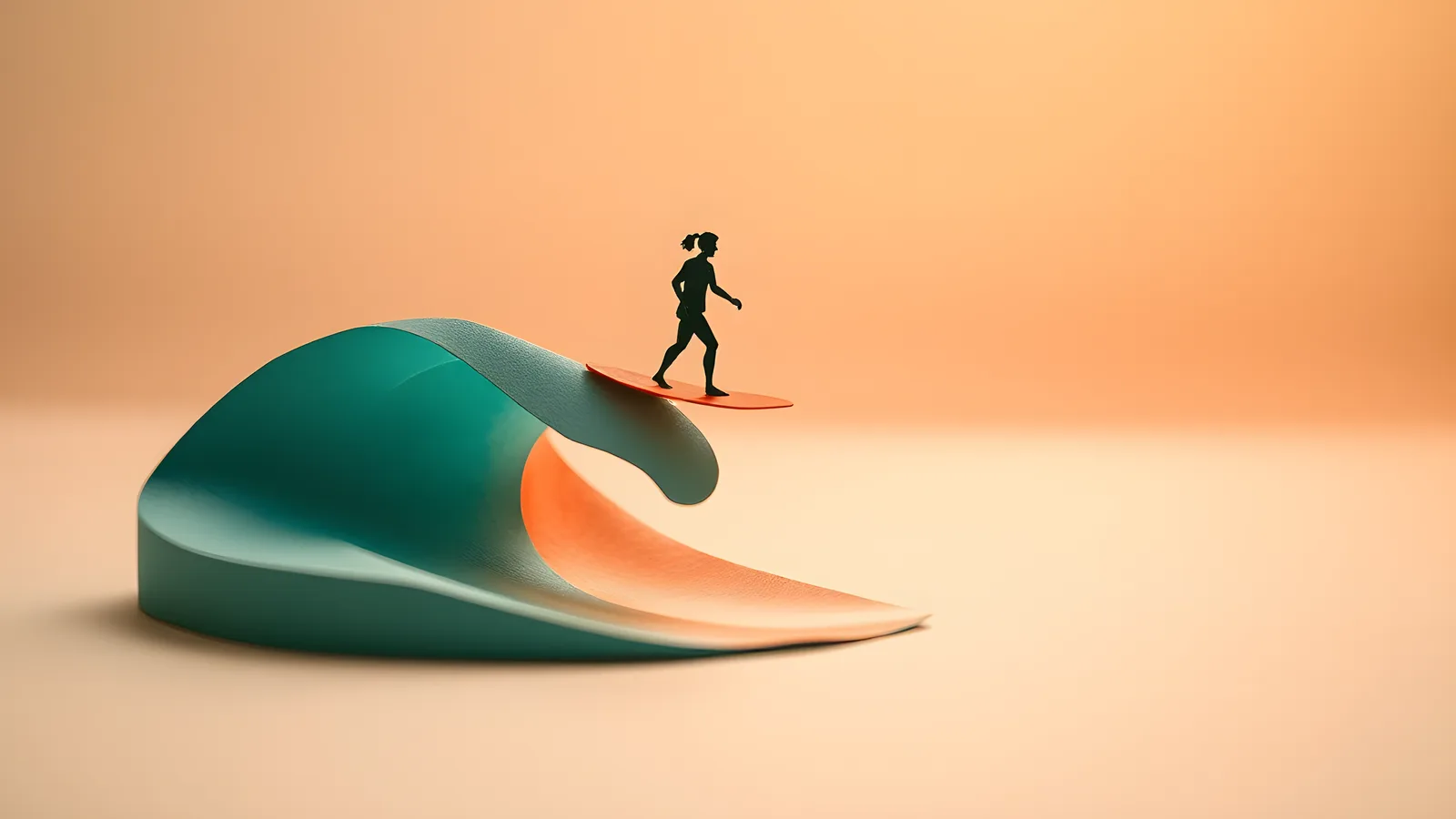
When an urge arrives, instead of fighting it or acting on it, observe it like a wave. Notice where it sits in your body, watch its intensity rise, plateau, and fall. Most urges peak within 90 seconds to 5 minutes and fade if not acted upon. The skill isn't suppressing the urge, it's recognising that urges are transient sensations, not commands.
How to do it: Practise on small urges first, the ones with low stakes. The urge to check your phone. The urge to switch tasks. The urge to grab a snack. When the urge arrives, name it: "this is an urge to check Instagram." Set a 5-minute timer. Notice the physical sensations: tightness, pressure, pull. Watch them shift. After 5 minutes, the urge is usually weaker. Build the skill on small impulses so it's available for big ones, not the other way around.
5. The pause protocol (5 seconds for verbal impulses)
Targets: response inhibition, particularly verbal.
For verbal impulsivity (interrupting, blurting, replying before thinking), build in a 5-second pause between impulse and speech. Five seconds is short enough to feel manageable and long enough to engage the prefrontal cortex.
How to do it: In meetings or conversations, when you feel the urge to speak, count to 5 silently before opening your mouth. Often the impulse fades, the conversation moves on, or a better version of what you wanted to say arrives. For written communication, save the message as a draft and re-read after 10 minutes before sending. For email and Slack, install a delay-send feature so messages sit in the outbox for a few minutes, giving your future self the chance to intervene.
A note on medication: if impulsivity is significantly impairing function, stimulants and non-stimulants both reliably improve response inhibition and reduce delay discounting (Coghill et al., 2014). Medication isn't a substitute for the strategies above, it's what gives them traction. Many people find their coaching, CBT, or DBT work becomes substantially more effective once medication is dialled in. That's a conversation for your GP and a psychiatrist.
What This Looks Like in Practice
At work. You're in a meeting. Someone says something you have an opinion about. The urge to interrupt is fully formed before the thought is. Try the pause protocol: count five before opening your mouth. The impulse fades, or the conversation moves on, or a better version arrives. For email, install a delay-send and re-read after 10 minutes. The rule isn't "don't reply quickly," it's "give yourself one chance to intervene before the future you has to clean it up."
In your wallet. Your highest-risk impulse window is probably late evening, when prefrontal function is low, dopamine seeking is high, devices are accessible, and nobody's around to witness. Friction architecture matters more here than willpower. Phone in the kitchen overnight. Saved card removed from the worst shopping app. Browser-only access to the others. A 48-hour rule on anything over a threshold you set when calm. None of these stop a determined impulse, but they create a pause, and the pause is what you needed.
In your relationships. If your impulses cluster around emotional intensity (the angry text, the walked-out conversation, the dramatic decision), that's urgency, not response inhibition failure. The strategy is upstream: regulate the emotion before the impulse forms. The 10-minute rule from emotional regulation (set a timer, do anything else, revisit afterwards) catches most urgency-driven impulses before they leave the building. So does the temperature reset (cold water on the face), which works on the nervous system rather than on the thought.
Key Takeaways
- ADHD impulsivity isn't one thing. It's at least four: response inhibition, choice impulsivity (now-bias), delay aversion, and urgency. Each runs on different brain circuits and responds to different tools.
- The neural deficit is real and structural, not motivational (Senkowski et al., 2024). "Just be more disciplined" tells you to fix the wrong system.
- Match the strategy to the flavour. If-then plans for premeditation. Friction for response inhibition. Urge surfing for urgency and delay aversion. The pause protocol for verbal impulses.
- Identify your dominant flavour first with a two-week impulse log. Most people run on one or two, not all four. Targeted strategies outperform generic ones every time.
Related Reading
- Emotional Regulation for ADHD: 5 Neuroscience-Based Tools - Urgency-flavoured impulsivity is emotional dysregulation in disguise. This guide goes deeper on the upstream tools.
- ADHD Overwhelm Spiral: How to Pause and Reset - When overwhelm depletes the inhibition system, every flavour of impulsivity gets worse. The reset protocol matters.
- ADHD Bedtime Routine: Wind-Down for the Restless Brain - Late evening is the highest-risk impulse window. A wind-down structure is a structural impulsivity intervention.
- ADHD Task Initiation: Breaking Paralysis - Lack of perseverance shows up as impulsive task abandonment as well as initiation difficulty. The same scaffolding helps.